Climate Change
-
Featured
Kiribati
-
Balance Simulator Reflection
There is a lot that goes into managing a government with regards to people, profit, and planet. The Triple Bottom Line simulator gives a lot of insight into the difficulties governments face in order to balance the population, economy, and the environment. It is definitely complicated to find a way to accommodate the needs of… Read more
Kiribati – A Canary in the Coal Mine of Climate Change
Kiribati (pronounced: keer-uh-bas) is an island nation located in the Central Pacific Ocean, consisting of 33 atolls with a land area of around 800 square kilometers. 95,000 people live here, on islands that at least from certain pictures, looks like what many would call a paradise. The lives of the I-Kiribati (pronounced: e-keer-uh-bas) are often simple, and many make their living by working in one of the few industries that exist on the islands – tourism and the production and exports of fish and copra (a by-product of coconut which is used to make coconut oil). Kiribati is among the poorest and most under-developed nations in the world; it is also one of the most vulnerable to climate change.
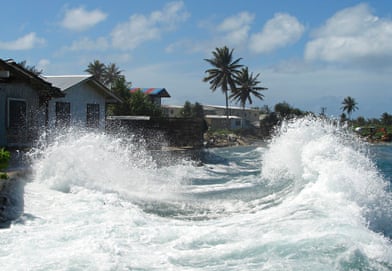
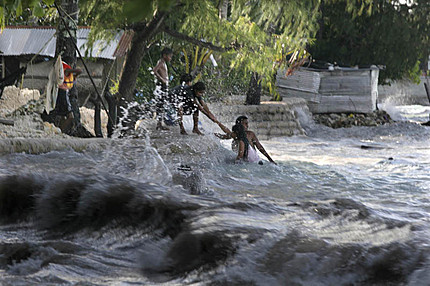
The effects of climate change are already being seen in Kiribati. Due to its low-laying geography, the nation’s atolls are susceptible to coastal erosion, coral bleaching, and other issues arising from increasing heat and sea-levels. Many of Kiribati’s residents live off the land for both their own food and for industry, therefore, its extremely important for their livelihoods that their land can support agriculture. Unfortunately, with the atolls being flat and only an average 3 to 4 meters above sea-level; sea water flooding and destruction of agricultural lands is common. Fish habitats and ecosystems are in danger due to rising heat levels in the water and erosion of coastal areas. The E-Kiribati are dependent on their land and marine habitats, and without them they will lose their way of life. The threats of climate change are difficult to ignore when considering the situation in Kiribati; we are destroying our planet, and small island nations are the first to witness this impending destruction.
Kiribati is only one of the nations modelling as a grim example of what is ahead for the entire world.
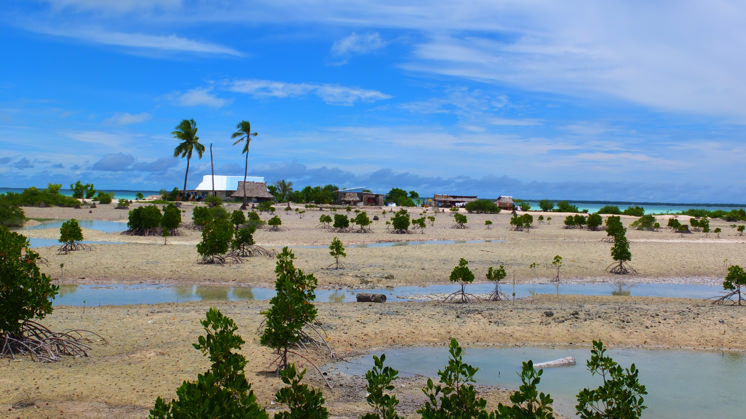
Small island nations all over the globe are facing several economic and health concerns as a result of climate change’s imminent effects. The environment and the health of the species existing within it are dependent on each other. Without a thriving environment, you cannot have a thriving population. Climate change is a catalyst for food security issues in island nations like Kiribati. There is simply no longer enough land or healthy marine ecosystems to sustain the population, and it is getting worse every year. It may be hard for some in developed and landlocked regions to understand the circumstances of climate change right now, and why it is important we begin to fix it immediately; but entire regions of the world are already suffering, and it will only continue until the whole planet is being affected firsthand.
The Angry Sea Will Kill Us All https://interactives.stuff.co.nz/2017/10/kiribati-the-angry-sea-will-kill-us-all/
The Small Island Developing States (SIDS)are a group of 38 UN designated climate-vulnerable island nations in the Caribbean and South China Sea, as well as the Pacific, Atlantic, and Indian Oceans. Most of these countries, of which includes Kiribati, are remote and lacking in natural resources. Large quantities of food must be imported in and there is little infrastructure, transportation, or communication systems. They are often under equipped to deal with extreme weather and other disasters. The Bahamas is one of the wealthiest nations among the SIDS, however, it was still devastated by Hurricane Dorian in September. These nations are too small, remote, and thusly, depend on others for aid in the event of extreme weather-related disasters. It can often take years to rebuild the destruction that is left in the paths of hurricanes, typhoons, and other catastrophes. SIDS are often dependent on industries like tourism for their overall economy and individual livelihoods. They make their income off their island and when weather events cause destruction to infrastructure and the general beauty of the location; their economies and people suffer greatly. Extreme weather-related disasters and unpredictable weather conditions are a consequence of climate change and consequently, they are likely to only become more devastating and frequent in the coming years. These nations are watching their own imminent destruction, and there is little else they can do; it’s a global problem.
This global problem is starting at the Arctic’s ice caps; they are melting due to the rising temperatures. The Antarctic and Greenland ice sheets, 14 million and 1.7 million square kilometres respectively, are experiencing melting and breaking of ice shelves. They are the two largest bodies of ice on planet Earth; if the Antarctic ice sheet alone were to completely melt, the global sea-level would rise 60 meters. The water from these melting ice caps and ice sheets is causing an increase in sea-levels worldwide. As well, the melting ice sheets decrease the salinity in ocean water by introducing large quantities of freshwater. This becomes a serious issue because many ocean species and ecosystems, not just in the Arctic, are reliant on the ocean’s salt content to flourish. The creatures and humans who live in the planet’s Arctic regions will be affected immensely. Krill are the foundation of the Antarctic’s marine food web, and with the expected levels of ice melt, the species could see a significant decrease. Without plentiful amounts of krill, all living species in the Arctic will suffer – but it will not stop there.
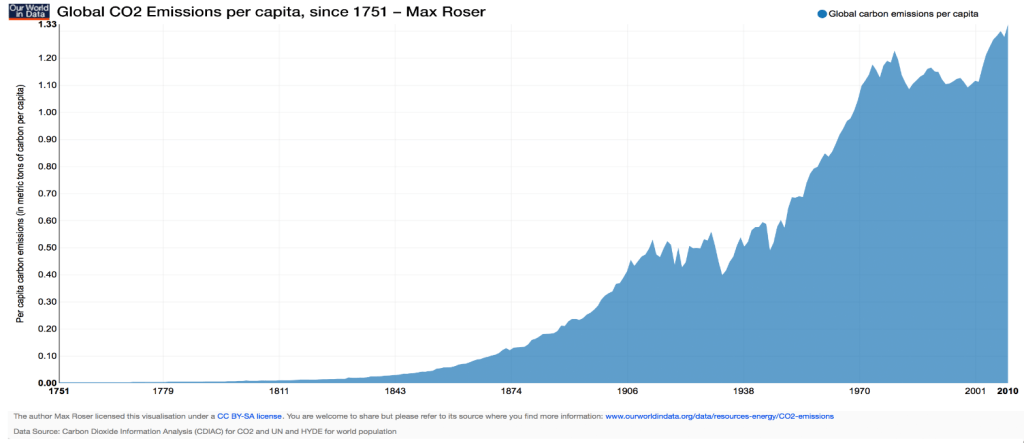
Climate change postures a common threat to all people on this planet; Regardless of where we come from, our cultures, customs, and traditions are founded on our ecosystems – and when our ecosystems are facing devastation, our identities are in jeopardy.
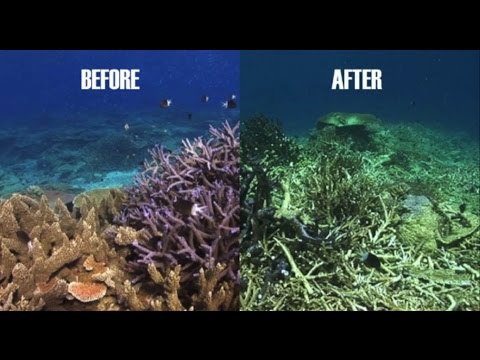
In these small and economically simple nations, living off the local surroundings is important. The people who live in climate-vulnerable islands like Kiribati are losing their cultural identities – their ways of life. The facets of the environment that they desperately rely on are disappearing. Their islands are flooding; waves from storm surges are killing their crops with salt water and pulling their homes and villages into the ocean. The marine ecosystems they depend on for food and trade are becoming damaged due to coastal erosion and coral bleaching. When coral bleaching occurs, the algae that lives in the tissues of the coral expels out, causing the coral to turn white. Coral bleaching can occur when water becomes too warm due to the heat outside of the ocean, as well as excess CO2 in the atmosphere. When extra CO2 dissolves in the ocean it becomes a carbonic acid, which means the ocean is becoming more acidic and in turn, more harmful to the marine life. In 2016 the Great Barrier Reef experienced a mass bleaching event that scientists say was 175 times more likely to come as a result of climate change than any other factor that could have caused it. Since the 2016 mass bleaching, 30% of the corals have died on the Great Barrier Reef, as well as complete ecosystem collapse in some locations along the reef.
The SIDS are simply the first nations to confirm the effects of our planet’s climate crisis. It may be too late to completely rectify the destruction that climate change has caused in small island states like Kiribati; but the SIDS can become the open-laboratories for sustainable development systems and initiatives. By studying the damages inflicted by rising heat and sea-levels we can find ways to adapt to the situations we find ourselves in – we can possibly diminish the harm triggered by climate change.
In Papua New Guinea, a local conservationist named Alfred Masul has found solutions to overcome and adapt to inland flooding and coastal erosion, two of the most significant problems small island states are facing due to climate-influenced weather events. Masul has resorted to planting mangrove trees along the coast of his home province of Madang. Mangrove trees help attract fish; the oxygen the trees release into the water improves fish habitats and ecosystems. After only seven years of his project, Masul and his team were already finding bigger, healthier fish in larger populations as well as species that had not been seen in that area for many years. The mangrove trees did not only limit the effects of coastal erosion – they revived the marine life the local people and ecosystems are so dependent on.
In Kiribati, to solve the problem of inland flooding and lack of usable agricultural land; the UN developed a project which helps families grow food with soil using a hydroponic system. Hydroponics is a method developed to grow plants using water-based nutrient solutions. Projects like this one are integral to the survival of places like Kiribati in the future.
No Ordinary Man https://undp-adaptation.exposure.co/no-ordinary-man
The countries being affected the most right now, the SIDS, have already began working on solutions to live in a climate change affected world – they must, as their lives depend on it. But they are under-equipped to solve the greater issue of climate change; they can only keep using these solutions for so long until they become impractical. Here in developed nations, we can begin by investing in the development of more renewable energy systems, ones that will produce fewer toxic emissions and pollutants into the air. Phasing out fossil fuel energy sources like coal in favour cleaner systems like wind, solar, or nuclear power are important. This will not only improve the air quality, but it will help limit our impact on the environment. Policies need to be enacted at an international level to ensure all nations worldwide do their part in lowering their impact on the planet. Our global emissions need to be reduced and solutions need to be found to help the nations being displaced by climate change. The effects already seen are mostly likely not going to disappear, but we can find ways to adapt to them and prevent further damage in the future.
The truth is that small island states are some of the lowest contributors to global greenhouse gas emissions, the main culprit of climate change. Kiribati, as an example, is the third lowest greenhouse gas emitter in the world – but it’s the one seeing some of the most devastation at the hands of climate change. It’s a large-scale model of what the threats of climate change can have on the rest of us – it is a canary in the coal mine of climate change, and optimism is hard to have when you see the destruction.
Sources and Further Reading:
Cauchi, J. P., Correa-Velez, I., & Bambrick, H. (2019). Climate change, food security and health in Kiribati: a narrative review of the literature. Retrieved November 1, 2019, from https://www.ncbi.nlm.nih.gov/pmc/articles/PMC6507958/
Climate Reality. (2019). Climate Change and the Great Barrier Reef: It’s in a Great Deal of Trouble. [online] Available at: https://www.climaterealityproject.org/blog/climate change-and-great-barrier-reef-its-great-deal-trouble [Accessed 13 Nov. 2019].
Island nations on climate crisis frontline ‘not sitting idly by’ | UN News. (n.d.). Retrieved November 1, 2019, from https://news.un.org/en/story/2019/09/1047652
Kiribati | UNDP Climate Change Adaptation. (2019). Retrieved 01 November 2019, from https://www.adaptation-undp.org/explore/micronesia/kiribati
Make this the year of ‘transformative solutions’ to avert disastrous climate change: UN Deputy Chief | UN News. (n.d.). Retrieved November 4, 2019, from https://news.un.org/en/story/2019/03/1034701.
Mitchell, C. (2017). The Angry Sea Will Kill Us All: Our Disappearing Neighbours. Retrieved November 3, 2019, from https://interactives.stuff.co.nz/2017/10/kiribati-the-angry-sea will-kill-us-all/
National Geographic Society. “Ice Sheet.” National Geographic Society, 9 Oct. 2012, https://www.nationalgeographic.org/encyclopedia/ice-sheet/
Oceanservice.noaa.gov. (2019). What is coral bleaching?. [online] Available at: https://oceanservice.noaa.gov/facts/coral_bleach.html [Accessed 12 Nov. 2019].
UNDPClimate. (n.d.). No ordinary Man by Climate Adaptation UNDP on Exposure. Retrieved November 3, 2019, from https://undp-adaptation.exposure.co/no-ordinary-man
Inside Kiribati: The Island Being Erased By Climate Change | AJ+ Docs. (2017). [Video]. Retrieved from https://www.youtube.com/watch?v=plzBaNaCIv4
 Mohawk College Climate Change